
ALL ABOUT CONKERS
By Dean Hilario
If you grew up in Britain, you probably played conkers. For the rest of us, here's how it goes. Every autumn, horse chestnuts drop from the trees, kids hunt down the shiniest ones they can find, drill a hole through the middle, and thread them onto a piece of string. Then you take turns swinging your conker at your opponent's until one of them cracks. That's the whole game. (We're told it gets very competitive.)
Oliver Warner, the founder, played it at school, and his parents played it when they were kids. They used to go out and pick conkers together, and the game became a link between his childhood and theirs. So when he started his own brand in London in 2021, he named it after the game. For a brand built around the seasons, slowing down, and the small rituals that get handed from one generation to the next, it's hard to think of a better name. And since it's conker season right now, the timing on this one worked out pretty well for us.
It worked out for a lot of you, too. If you've spent any time in our Discord, you saw this one coming. Conkers is a brand a lot of you have been asking us to carry, and we're happy to finally give it a home here at the shop.
Who's Behind It
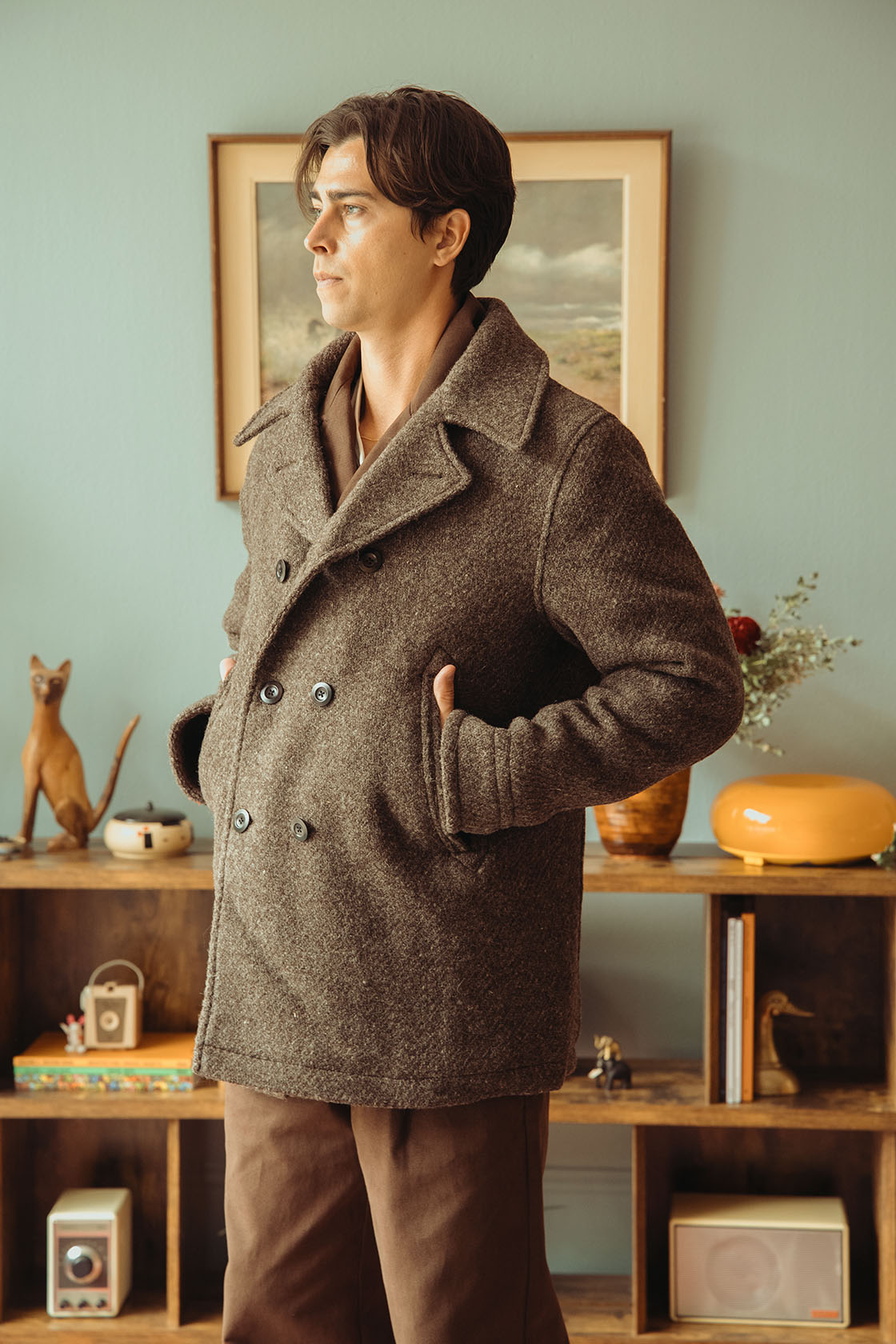
Oliver came up through brands a lot of you already know. He spent time at Our Legacy, Studio Nicholson, and C.P. Company before going out on his own. He was born in Manchester but grew up in the countryside of Worcestershire and the West Midlands, and that's the world Conkers comes from. After years in the industry, he wanted to make something closer to home. Conkers is the his take on the countryside he grew up in, built on craft, community, and knowing the people who make your clothes.
We see that in how the brand runs. Nearly everything is made in the UK with British and Irish mills and makers. He'd rather drive out to the factory, have a cup of tea with the owners, and talk shop over the sewing machines than send a spec sheet across the world. There are two collections a year and he has no interest in doing more. Every label is hand-stamped with a number. (Also, his favorite color is brown. We knew we'd get along.)
Rural Britain, Minus the Fox Hunt
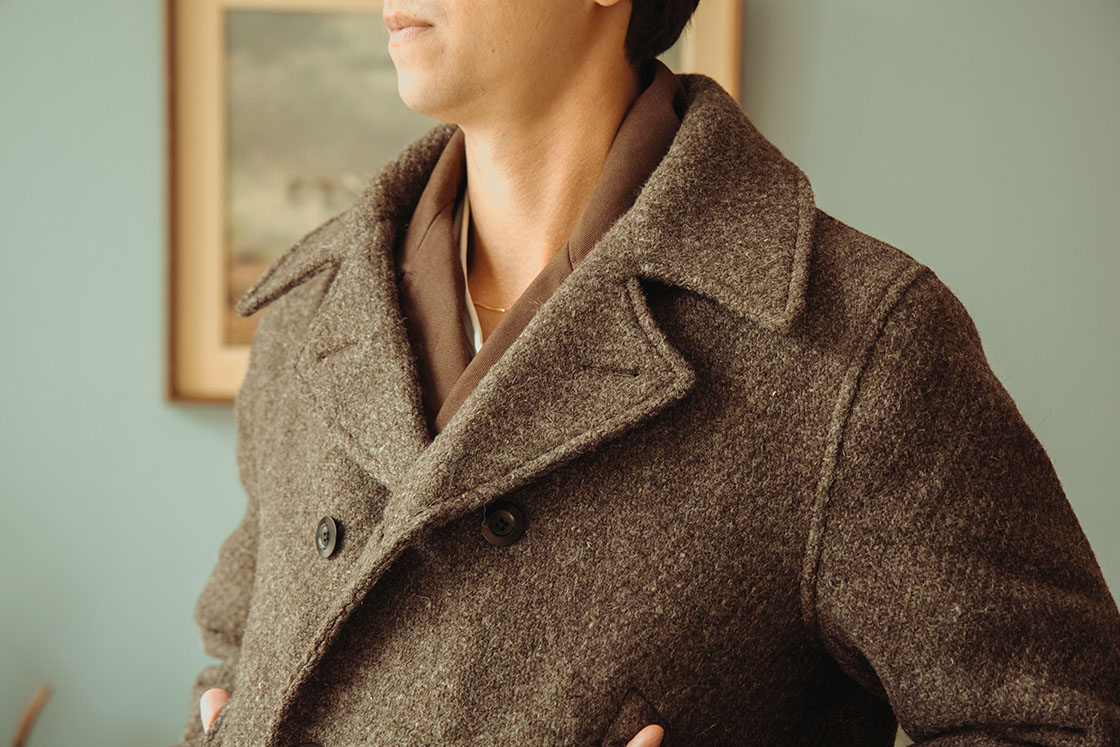
Picture British clothing and you probably see tweed, waxed jackets, and a fox hunt. Oliver puts it better than we can: 'It's not posh men on horseback going foxhunting. The real people are grandparents pottering about in the garden wearing clogs and an old jacket with holes in.' Conkers is built around those people: the farmers, millers, and gardeners who wear their clothes hard.
The references come from old British work clothes and tailoring, but the finish is sharper. Workwear fabrics get tailored details, and tailoring gets cut from waxed cotton. This results in clothing that is meant to be worn hard, and the kind that only get better once they’ve picked up some wear. And to nobody’s surprise, the matching sets are some of our favorites from the collection.
The Rambler Blazer and Rambler Trouser
The Rambler set is cut from dry wax cotton by Halley Stevensons, a mill in Dundee, Scotland that's been around since 1864 and has been waterproofing fabric for more than a century. If you've owned a waxed jacket, you know the deal, but dry wax gives you the water resistance without the downsides of a traditional wax. The fabric is crisp and matte, garment washed to soften it up, and lined in brushed Italian cotton twill for some warmth.
The blazer is relaxed and unstructured, somewhere between casual tailoring and a jacket you'd wear out in non-ideal weather. It's slightly cropped, with subtle darts, flap pockets, a buttoned lapel, and some hidden zigzag stitching under the collar that you'll only notice when you flip it up.
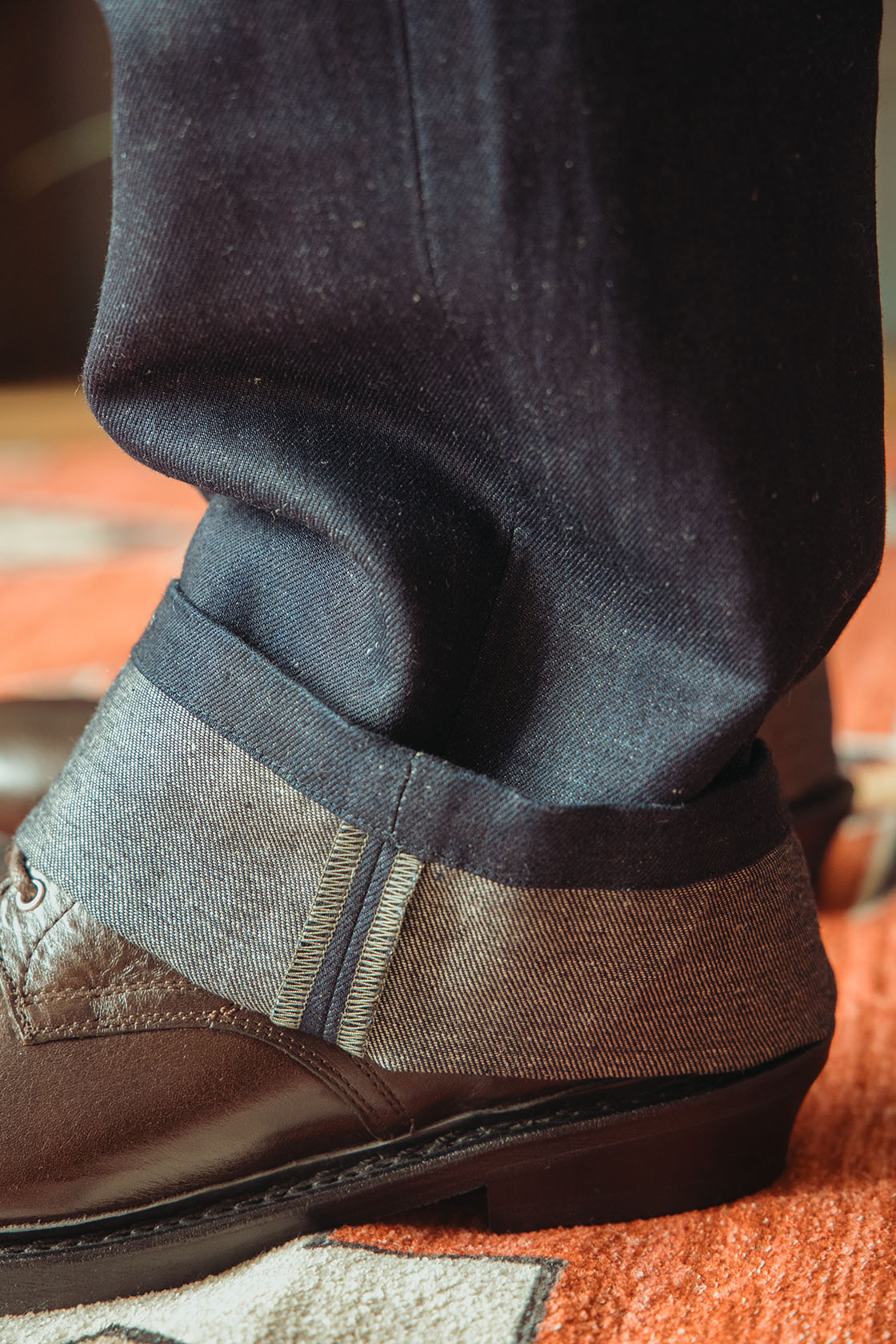
The trouser is where it gets fun for us. It has the roomy proportions of a pleated trouser, a slightly dropped crotch, and a self-fabric drawstring waist borrowed from British Army S95 combat trousers. So yes, technically we found a way to sneak another fatigue onto the shelves. We can't help ourselves. Wear the two together as a suit or split them up. Both work.
The blazer is relaxed and unstructured, somewhere between casual tailoring and a jacket you'd wear out in non-ideal weather. It's slightly cropped, with subtle darts, flap pockets, a buttoned lapel, and some hidden zigzag stitching under the collar that you'll only notice when you flip it up.
The trouser is where it gets fun for us. It has the roomy proportions of a pleated trouser, a slightly dropped crotch, and a self-fabric drawstring waist borrowed from British Army S95 combat trousers. So yes, technically we found a way to sneak another fatigue onto the shelves. We can't help ourselves. Wear the two together as a suit or split them up. Both work.
- 100% cotton dry wax fabric from Halley Stevensons
- Water-resistant emulsified wax finish
- Brushed Italian cotton twill lining
- Garment washed
- Blazer: unstructured, relaxed and slightly cropped fit, buttoned lapel, two flap pockets, corozo buttons made in the Cotswolds
- Trouser: roomy single pleat, S95-inspired drawstring waist, deep front pockets, bound internal seams
- Made in England
- Colors: Black, Seafoam
- Price: Blazer $770, Trouser $610
The Bruton Blazer and Scots Pant
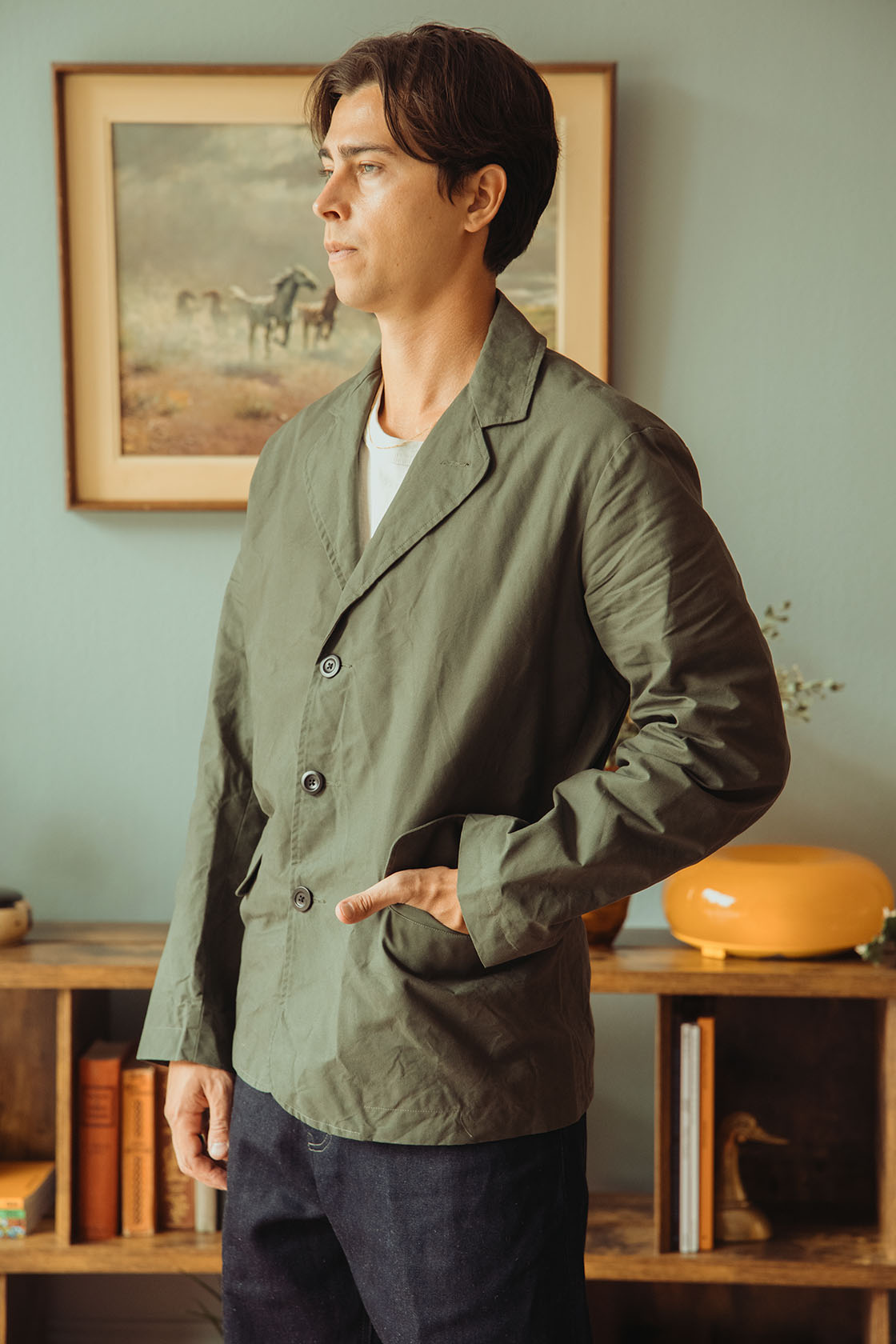
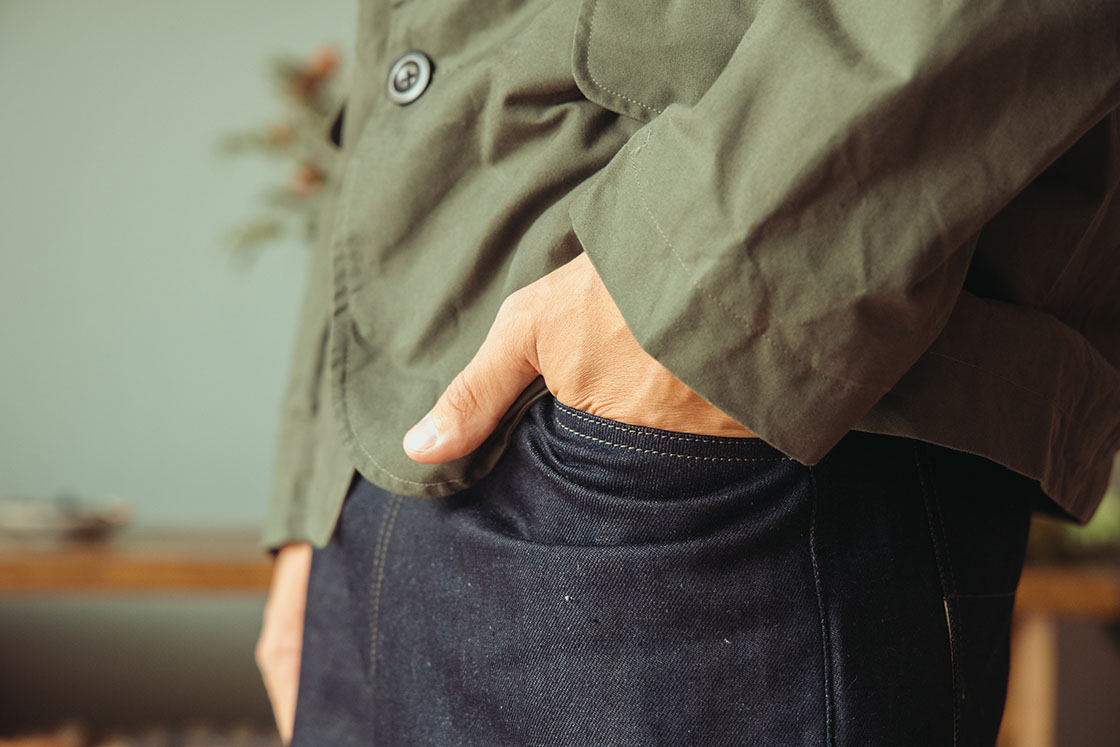
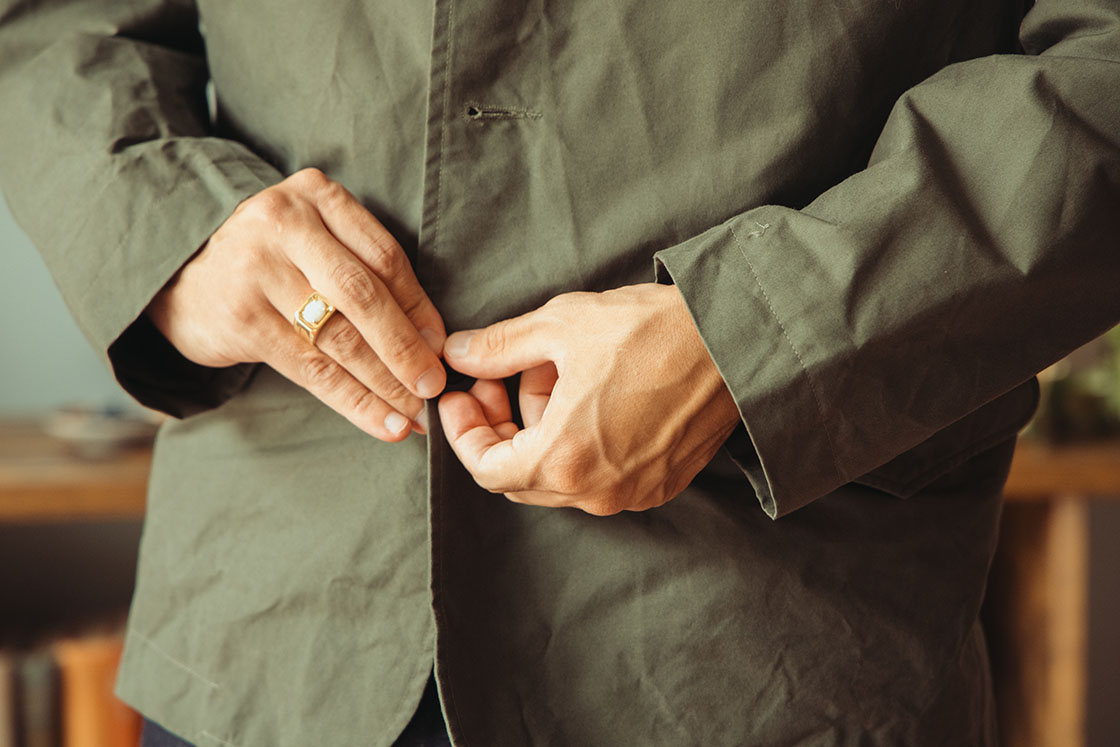
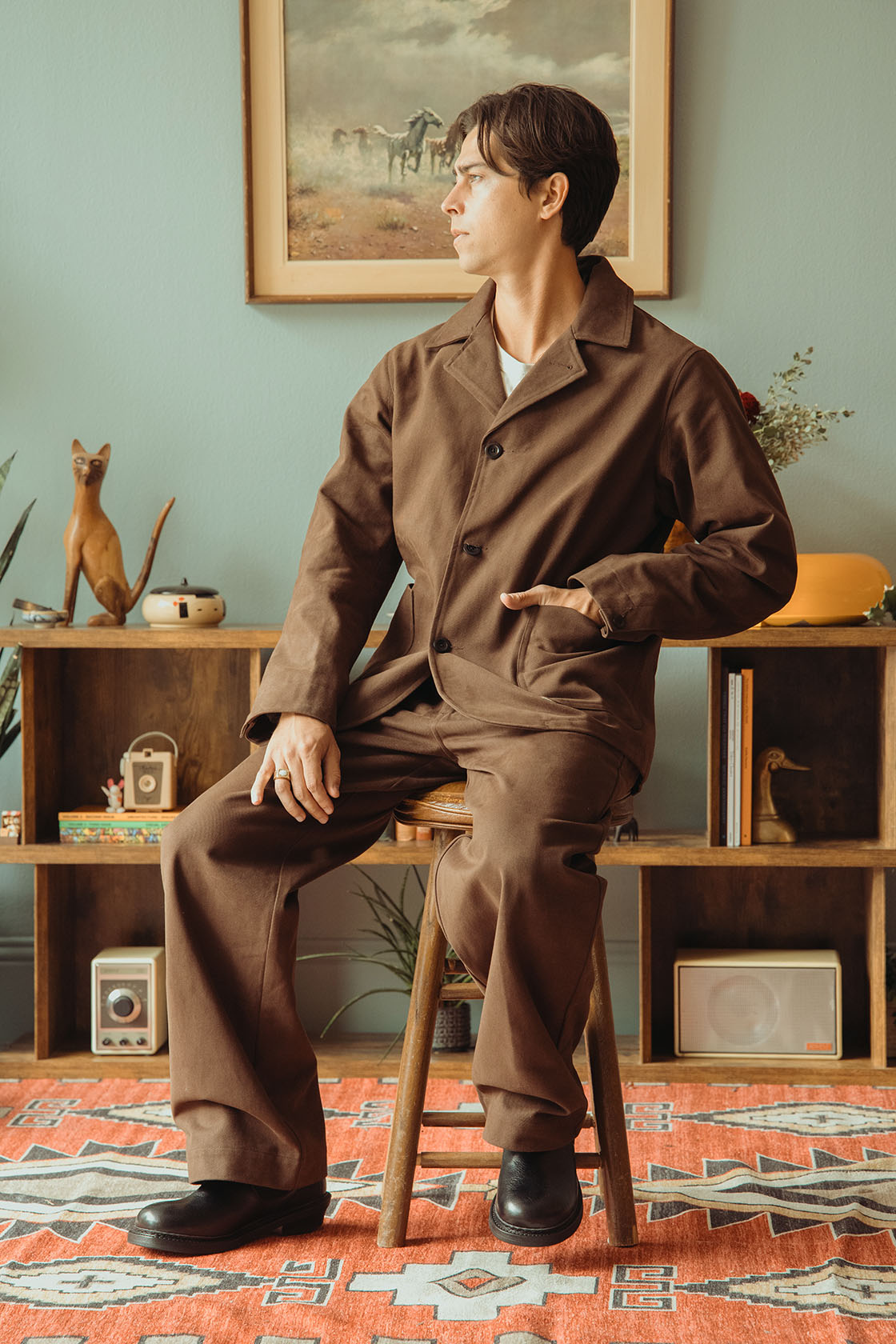
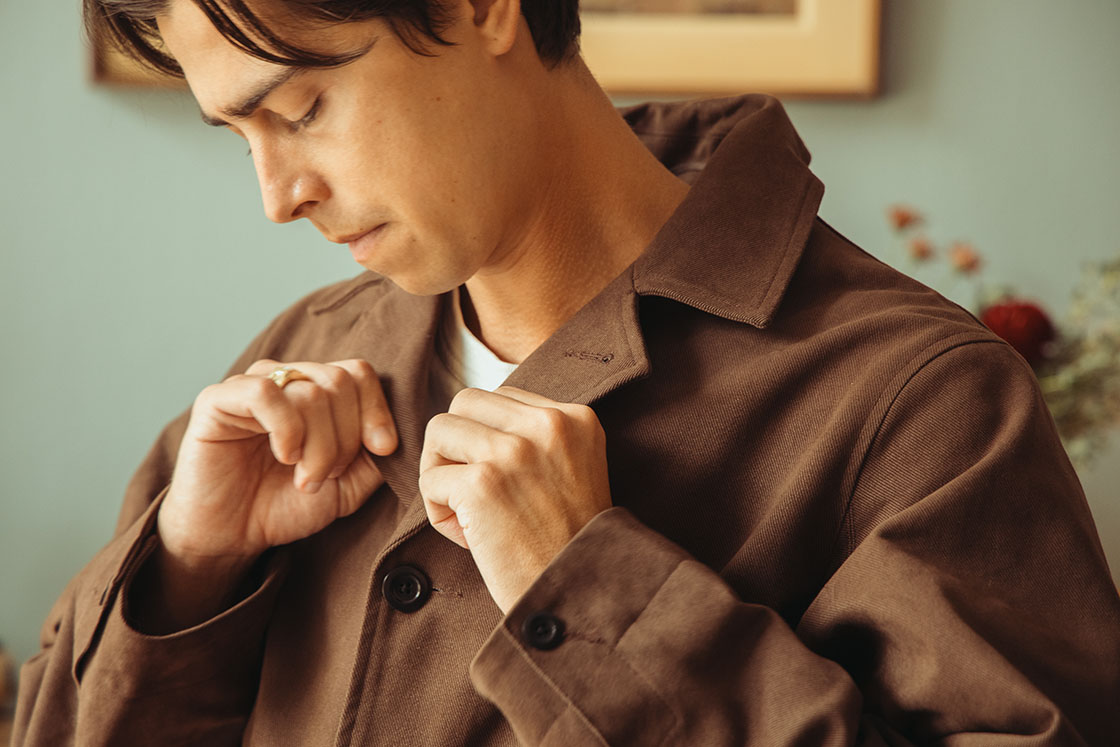
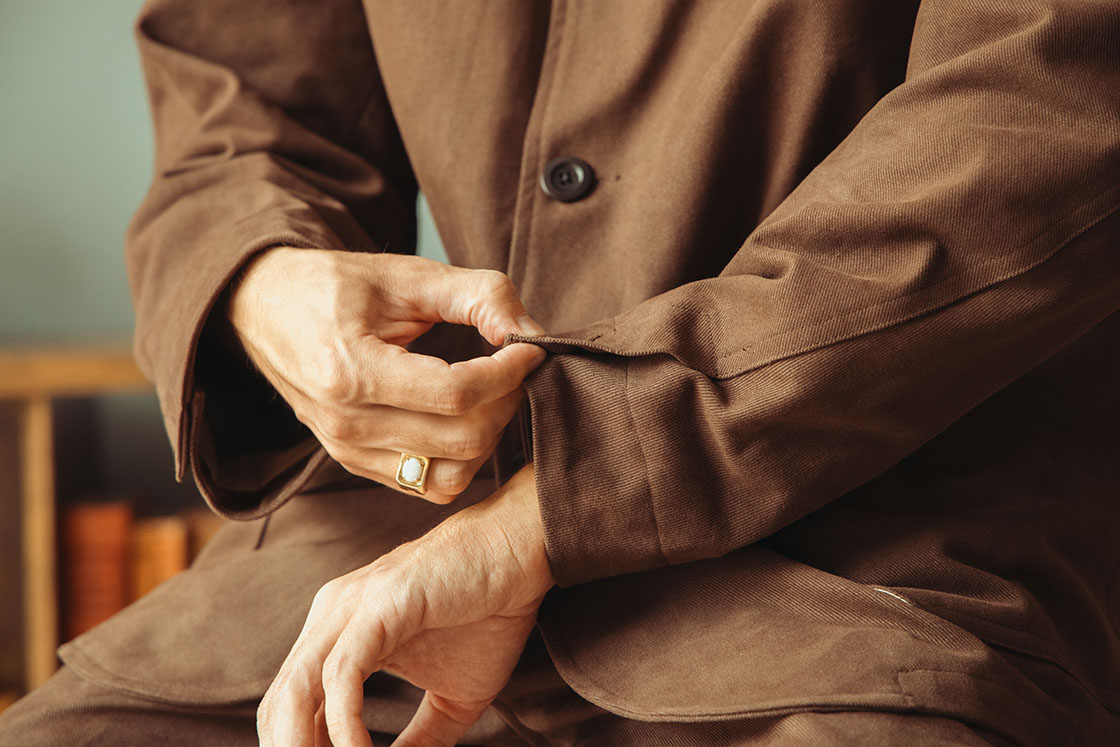
If the Rambler is the kit for bad weather, the Bruton and Scots is the one for every other day. Both are cut from a heavy cotton twill with a peached surface (brushed until it's soft, almost suede-like), so you get the toughness of workwear with a much nicer hand. The Bruton Blazer is slightly cropped, with simple patch pockets, a partial cotton twill lining, two big interior pockets, and corozo buttons. Think of it as a work jacket with tailoring manners.
The Scots Pant is the dressier of the Conkers trousers we're carrying. A single pleat opens into a wide, straight leg, and the detail we keep coming back to is the loop-tab waist fastening, one of Conkers' signatures. Bound seams on the inside and jet pockets on the back keep everything clean. Lovat, if you're wondering, is an old Scottish tweed color, that muted blue-green you'd see on a hillside. The Dark Brown is, well, brown. Oliver's favorite. Ours too.
The Scots Pant is the dressier of the Conkers trousers we're carrying. A single pleat opens into a wide, straight leg, and the detail we keep coming back to is the loop-tab waist fastening, one of Conkers' signatures. Bound seams on the inside and jet pockets on the back keep everything clean. Lovat, if you're wondering, is an old Scottish tweed color, that muted blue-green you'd see on a hillside. The Dark Brown is, well, brown. Oliver's favorite. Ours too.
- 100% cotton heavy peached twill
- Blazer: slightly cropped fit, partial cotton twill lining, front patch pockets, two large internal pockets, corozo buttons made in the Cotswolds
- Pant: single front pleat, wide straight leg, signature loop-tab waist fastening, bound internal seams, two rear jet pockets
- Hand-stamped limited edition labels, woven in Pembrokeshire, Wales
- Made in England
- Colors: Lovat, Dark Brown
- Price: Blazer $715, Pant $585
The Knot Scarf
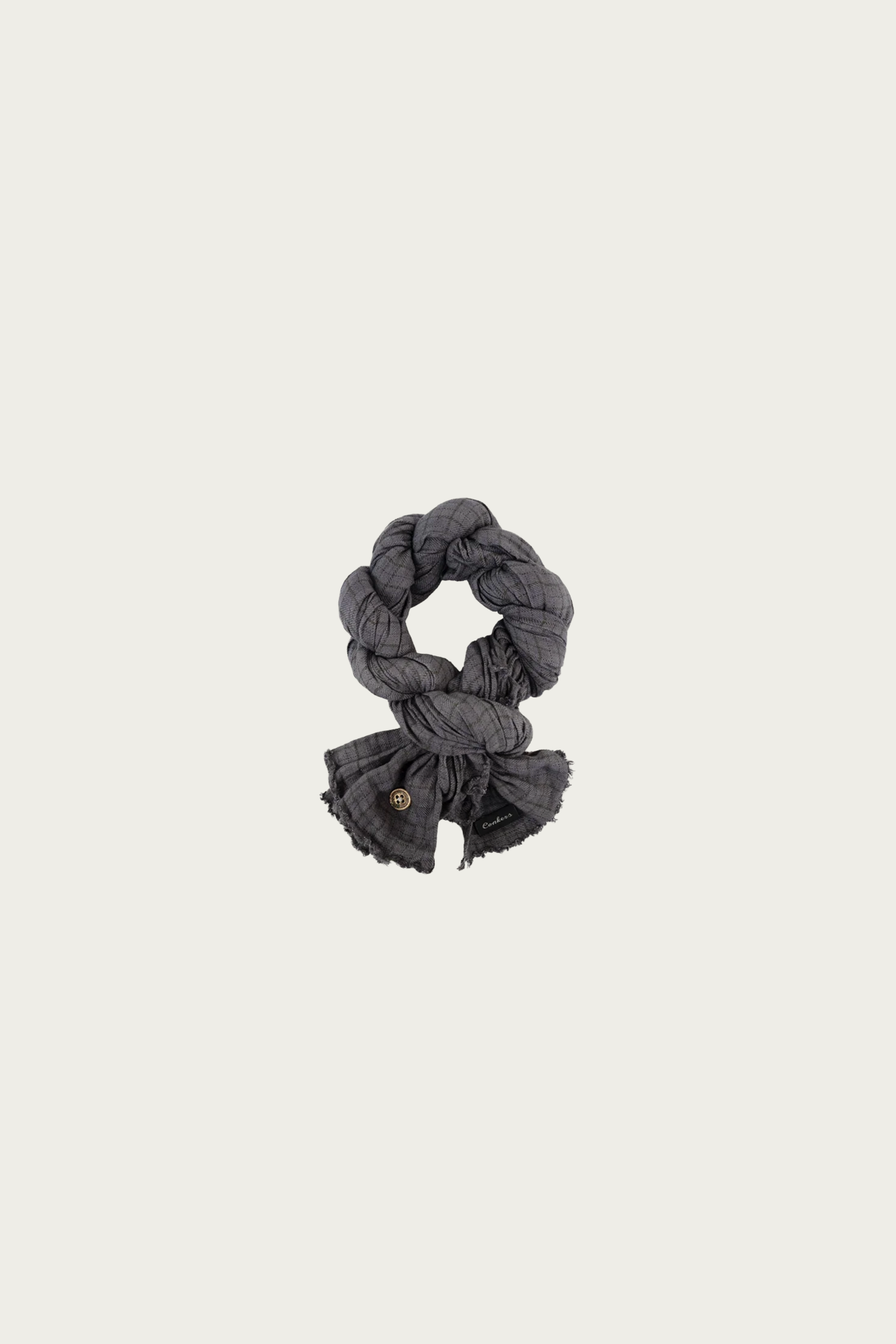
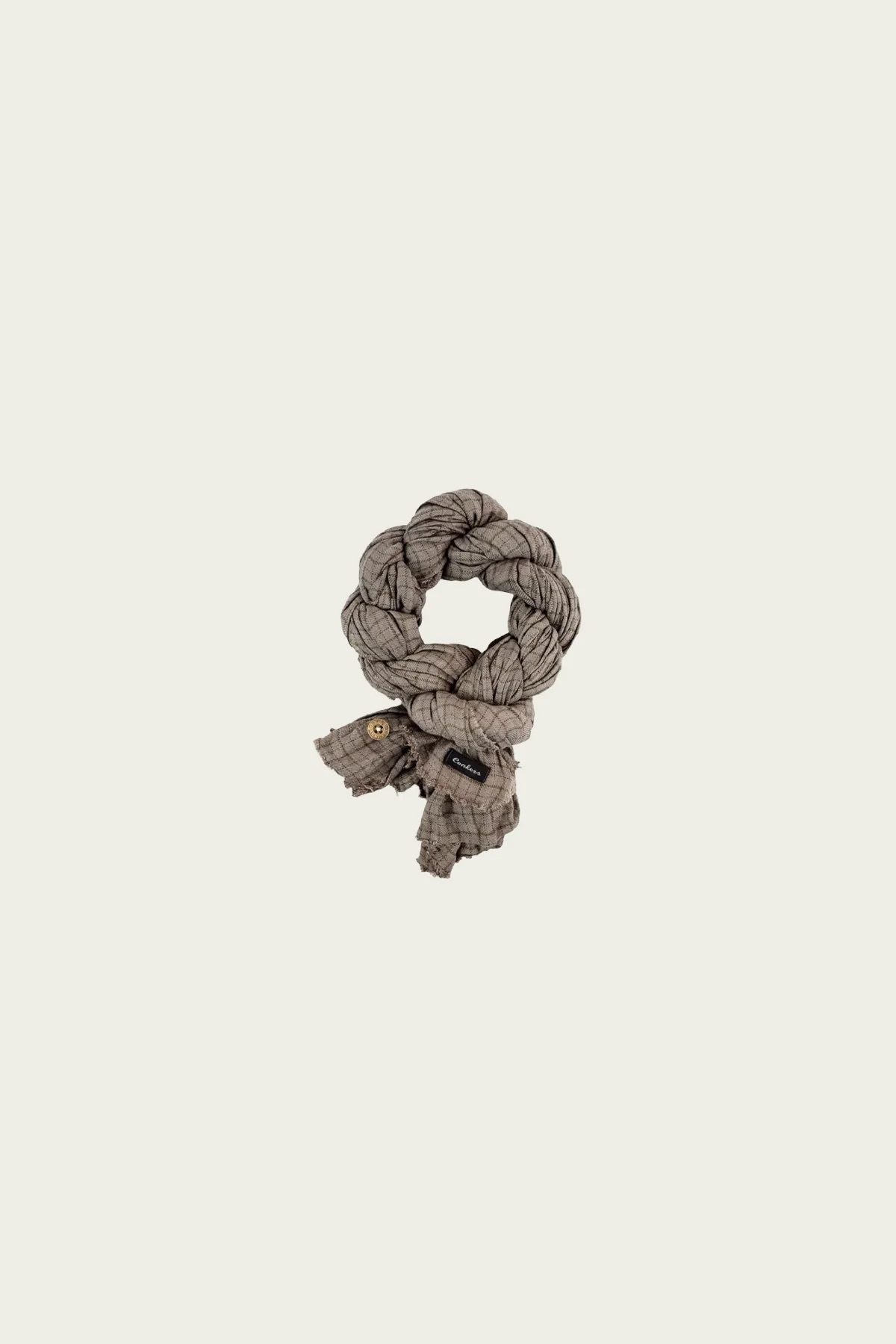
This small piece might have the best story. The Knot Scarf is a linen tattersall woven by Emblem Weavers, a family-run mill in Wexford, Ireland. Conkers garment dyes it to soften the check, leaves the edges raw, and finishes each one with an antique button pulled from the River Thames by mudlarks (people who comb the riverbank at low tide for whatever the water gives up). A lot of those buttons came off clothes thrown in the river more than a hundred years ago. Every button is different, so no two scarves match.
- 100% linen
- Pre-shrunk linen twill tattersall
- Woven by Emblem Weavers in Ireland
- Garment dyed
- Raw edges
- Antique reclaimed button detail
- Colors: Brown, Blue
- Price: $235
Welcome to the Village
Conkers is available now at Canoe Club, online and in-store. The runs are small and a lot of these pieces are numbered, so don’t think too hard.
Whether you're going full kit or just want a scarf with a hundred-year-old button on it, we hope you wear this stuff the way the people who inspired it do: often, outside, and until it's got a few holes in it. Welcome to the shop, Conkers.